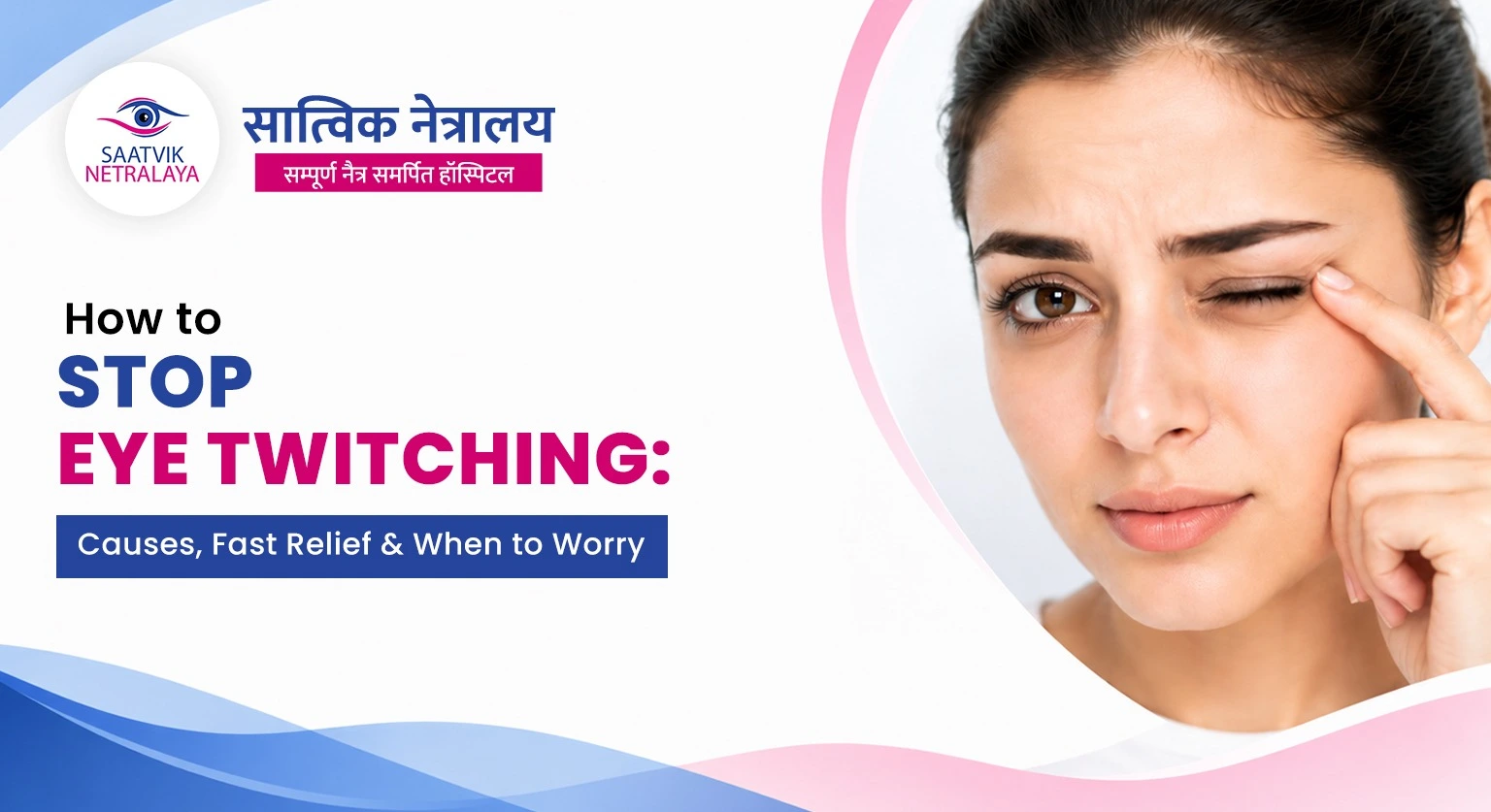
Why does your eyelid suddenly start jumping on its own? In most cases, it is a harmless condition called eyelid myokymia, and it happens to almost everyone at some point. Studies suggest that close to half of all adults will experience it at least once in their lives. If you are searching for how to stop eye twitching, the short answer is: cut back on caffeine, sleep more, rest your eyes, and use a warm compress.
Eye twitching causes are usually tied to stress, tiredness, or screen overuse, not to anything serious. This guide walks you through why it happens, what actually helps, and when it is worth a visit to the best eye hospital in Jaipur.
What Is Eye Twitching?
Eye twitching is a small, involuntary movement in your eyelid muscle. It feels bigger than it looks because most people around you will not even notice it. You might ask the question, why does my eye keep twitching. Usually, it is your eyelid muscle firing on its own, without you controlling it, and without any pain attached to it.
This condition has a proper medical name, eyelid myokymia. What matters is knowing that it is common, temporary, and tied to everyday habits rather than a hidden disease.
What Causes the Eyelid Muscle to Twitch
Your eyelid is controlled by a thin muscle called the orbicularis oculi. Normally, a nerve signal tells it to blink, and it obeys. During myokymia, small bundles of nerve fibres in this muscle misfire on their own. Doctors are still not entirely sure why this happens, but fatigue and irritation of the nerve are common triggers.
Myokymia vs Blepharospasm vs Hemifacial Spasm
These three sound similar but are not the same thing.
| Condition | What It Looks Like | How Serious Is It |
|---|---|---|
| Eyelid myokymia | A small flutter in one eyelid comes and goes | Common, harmless, resolves on its own |
| Benign essential blepharospasm | Both eyes blink or squeeze shut repeatedly | Rare, chronic, needs medical care |
| Hemifacial spasm | Twitching spreads to one side of the face | Rare, linked to nerve pressure, needs evaluation |
Most people in their lifetime deal with plain myokymia. It is annoying, but not fatal.
What Causes Eye Twitching?
Eye twitching causes are rarely just one thing. Usually, two or three habits stack up together and push your eyelid past its limit of comfort.
Stress, Fatigue & Sleep Deprivation
Stress and poor sleep are the two most common triggers doctors hear about.
- Your nervous system runs on rest, and when it does not get enough, small muscles like your eyelid are often the first to show it. This is so well known among medical students, who tend to be sleep deprived and stressed during exams, that doctors sometimes call it the “medical students’ twitch”.
- Think of your eyelid muscle as the last one to get rest. Your body prioritises bigger systems first, like your heart and your brain, and by the time it gets to fine motor control in a small eyelid muscle, there is little reserve left.
That is why a single bad night rarely causes a twitch, but a stretch of poor sleep almost always does. Deadlines, travel, exams, and family stress all add up in the same way, even when they feel unrelated to your eyes.
Caffeine, Alcohol & Nicotine
Caffeine is one of the most studied triggers. In one clinical trial, a single 200 mg dose of caffeine, roughly two cups of coffee, measurably increased eyelid muscle activity and raised twitch frequency from about 1.2 to 1.7 episodes per minute within a short window. The severity stayed mild in that study, but the pattern was clear and consistent across participants.
- Alcohol and nicotine work differently, but both disturb sleep and irritate your nervous system, which can add to the problem.
- If you already drink several cups of tea or coffee a day, cutting back gradually, rather than all at once, is usually easier to stick with and just as effective for calming a twitch.
Nutritional Deficiencies (Magnesium, Potassium, B12, Vitamin D)
Muscles, including the tiny ones in your eyelid, depend on a steady supply of magnesium and potassium to relax properly after they contract. When levels run low, muscles can become twitchy and irritable. Vitamin B12 and vitamin D also support healthy nerve function, so a gap in either can make your eyelid more sensitive to other triggers.
Digital Eye Strain & Screen Time
Long hours on a screen are a major driver of eye twitching today.
- A study on patients with persistent eyelid twitching found a clear link between higher digital screen time and eyelid myokymia, alongside blood electrolyte imbalances.
- Separately, a study of Indian university students found that 45.5% already showed signs of digital eye strain, and some Indian studies during heavy screen-time periods have reported rates as high as 87%.
|Anyone working long hours on a laptop, switching between a phone and a monitor, or scrolling late into the night is putting the same strain on their eyes. Every time you focus closely on a screen, you blink less than usual, and your eyelid muscle works harder to keep the surface of your eye moist. Over a full workday, this adds up to real fatigue in a muscle that is barely the size of a grain of rice.
Dry Eyes, Allergies & Contact Lens Overuse
Dry, irritated eyes send constant low-level signals to your eyelid nerves. Allergies and overused contact lenses do the same thing. If your eyes always feel gritty by evening, that irritation alone could be behind your twitch. It is always advisable to opt for a dry eye treatment in Jaipur in such situations.
Are There Local Triggers Behind Eye Twitching in Jaipur?
Jaipur’s climate and water bring their own set of eye triggers. If you live here, some of these may sound familiar, and they often explain why a twitch feels worse in summer than in the monsoon.
Dust and Dry Heat Exposure
Jaipur’s dry, dusty air is hard on the eyes for most of the year. Constant exposure dries out the tear film faster than usual, leaving eyes irritated by evening. That irritation can easily tip a tired eyelid into a twitch.
AC and Desert Cooler Overuse
Air conditioners and desert coolers both push dry air across your face for hours at a stretch. This is comfortable for your body but rough on your eyes, since it speeds up tear evaporation and leaves the eyelid muscle more reactive than normal.
Hard Water and Local Diet Gaps
Jaipur’s water is notably hard, and hard water combined with diets that run low on leafy greens can quietly reduce magnesium and potassium intake over time. Neither factor alone usually causes twitching, but together with screen time and stress, they can add up. If you already drink plenty of water but still feel your eyes are dry and tired by evening, it may be worth looking at your mineral intake rather than just your water intake.
How to Stop Eye Twitching Fast: Step-by-Step Remedies
If you want to know how to stop eye twitching fast, home remedies for eye twitching are your first line of defence. None of these needs a prescription, and most work within a few days if you stay consistent with them.
- Step 1: Warm Compress Technique
Soak a clean cloth in warm water, wring it out, and hold it over your closed eyelid for five to ten minutes. Do this once or twice a day. The warmth relaxes the eyelid muscle and improves blood flow to the area.
- Step 2: Lubricating Eye Drops
If your eyes feel dry, preservative-free lubricating drops can calm the irritation that causes the twitch. Use them as often as you need.
- Step 3: The 20-20-20 Rule
Every twenty minutes, look at something twenty feet away for at least twenty seconds. This simple habit gives your eye muscles a break from screen focus. It is one of the most recommended ways to ease digital eye strain.
- Step 4: Eyelid Massage Technique
Using clean fingers, gently massage the eyelid in small circular motions for a minute or two. This can loosen a tense muscle and often bring quick, if temporary, relief. Further understanding of how to treat dry eyes helps in managing dryness long term.
Quick checklist for eye twitching relief:
- Cut caffeine for a few days
- Sleep at least 7 hours a night
- Apply a warm compress twice daily
- Use lubricating eye drops if your eyes feel dry
- Follow the 20-20-20 rule while working
- Reduce direct AC or cooler airflow on your face
- Track how long the twitch has lasted
What Foods and Nutrients Help Stop Eye Twitching?
Diet will not fix every twitch, but the right nutrients give your eyelid muscle less reason to misfire. Small, consistent changes to your meals tend to work better than short bursts of supplements, since your body absorbs nutrients from food more steadily.
Magnesium-Rich Foods
Spinach, almonds, pumpkin seeds, and bananas are all good sources of magnesium. Adding a handful to your daily diet is a simple, low-risk step.
Potassium and Hydration
Potassium works closely with magnesium to keep muscles functioning normally. Bananas, coconut water, and sweet potatoes are easy ways to boost intake, and staying well hydrated helps your body use these minerals properly.
Vitamin B12 and Vitamin D Sources
Dairy, eggs, and fortified cereals supply B12, while sunlight exposure and fatty fish support vitamin D levels. If you suspect a deeper deficiency, a simple blood test can confirm it.
How Long Does Eye Twitching Usually Last?
Most episodes of eye twitching last only a few days and go away on their own once you rest, cut caffeine, and sleep better. In some people, it can come and go for a few weeks, especially during a stressful period, easing off and then returning whenever tiredness builds back up. This on-and-off pattern is normal. It does not mean the underlying cause has changed. It is only worth worrying about if it stretches beyond two weeks without any improvement.
Left Eye vs Right Eye Twitching: Myth or Medical Fact?
Left and right eye twitching meanings are popular topics in folklore across India, where a twitch is often linked to good or bad luck depending on which side it is on. Medically, though, there is no difference between left eye twitching meaning and that of the right. The same triggers, stress, caffeine, fatigue, and screen time, cause twitching in either eye.
If anything, chronic eyelid myokymia has been shown to be somewhat more common in women, and it tends to worsen in colder weather.
When Should You See a Doctor for Eye Twitching?
When to see a doctor for eye twitching comes down to how long it lasts and what else is happening alongside it. A short, isolated flutter rarely needs medical attention, but a pattern of symptoms is worth flagging.
Warning Signs That Need Medical Attention
- The twitch lasts longer than two weeks
- Your eyelid fully closes during the spasm
- Twitching spreads to other parts of your face
- You notice drooping, vision changes, or eye discharge
- The twitch affects both eyes at the same time
Rare but Serious Causes
In a small number of cases, facial twitching can be linked to conditions such as Bell’s palsy, multiple sclerosis, or a stroke.
- Such cases are uncommon, and they typically come with other clear symptoms, such as facial weakness, slurred speech, or numbness, not just a fluttering eyelid on its own.
- A simple eyelid flutter, with no other symptoms, is very unlikely to be connected to any of these conditions. If you notice these additional symptoms, it is sensible to get checked promptly, since early evaluation helps doctors act quickly if needed.
- For the vast majority of people, though, eye twitching is nothing more than a tired eyelid asking for some rest.
Can Eye Twitching Happen After LASIK or Cataract Surgery?
Yes, eye twitching is one of the common LASIK surgery side effects in the days and weeks following the procedure.
- Your eyes are healing, adjusting to new tear film patterns, and often a little dry, all of which can trigger eye twitching after LASIK.
- Dryness after cataract surgery is one of the best-documented reasons for temporary eyelid twitching, since the surgery itself can briefly affect the nerves that regulate tear production.
- It usually settles on its own as healing progresses, and lubricating drops are used as advised by your surgeon.
- If a twitch appears weeks after your procedure and does not fade, mention it at your follow-up visit rather than waiting it out.
What Are the Medical Treatments for Persistent Eye Twitching?
For most people, home care is enough. But when twitching is severe, constant, or linked to blepharospasm, doctors have proven options available, and there is no need to simply live with it.
Botox for Blepharospasm
Botox injections are the standard treatment for benign essential blepharospasm. They work by temporarily relaxing the overactive eyelid muscle. Effects typically last a few months before a repeat session is needed. Most patients tolerate the injections well. The procedure is done in a short outpatient visit with minimal downtime.
When Surgery (Myectomy) Is Considered
In rare, severe cases that do not respond to Botox, a surgical procedure called myectomy may be considered. This removes part of the overactive muscle to reduce spasms long-term. It is reserved for a small subset of patients whose symptoms significantly affect daily life, and it is always a later-stage option discussed only after simpler treatments have been tried.
Book an Eye Check-Up at Saatvik Netralaya
If your eye twitching has lasted more than two weeks, or you simply want peace of mind, it is worth getting it checked. Saatvik Netralaya, widely regarded as thebest eye hospital in Jaipur, offers experienced ophthalmologists, modern diagnostic equipment, and personalised care for everything from minor eyelid concerns to complex eye conditions.
Book a consultation today and get your answers from specialists you can trust.
Note: This article has been medically reviewed for accuracy by our ophthalmology team.
FAQs
What pressure point stops eye twitching?
Some people find relief by gently pressing the inner corner of the eye, near the bridge of the nose, for a few seconds. This is not medically proven. But it is harmless to try alongside rest and hydration.
What is the main reason for eye twitching?
Stress, fatigue, and too much caffeine are the most common reasons. Screen overuse and dry eyes often add to the problem.
Can ice stop eye twitching?
A cold compress can sometimes calm eyelid muscles, similar to a warm compress. Either can help, so use whichever feels more soothing to you.
What drink helps with eye twitching?
Coconut water and other hydrating, potassium-rich drinks can help. This is especially true if your twitching is linked to dehydration or low electrolytes.
How do you stop an eye twitch fast?
Cut caffeine, apply a warm compress, use lubricating drops, and get a full night’s sleep. Most twitches ease within a day or two of these changes.
What deficiency causes eye twitching?
Low magnesium is the deficiency most often linked to eye twitching, though low potassium, B12, and vitamin D can also play a role.