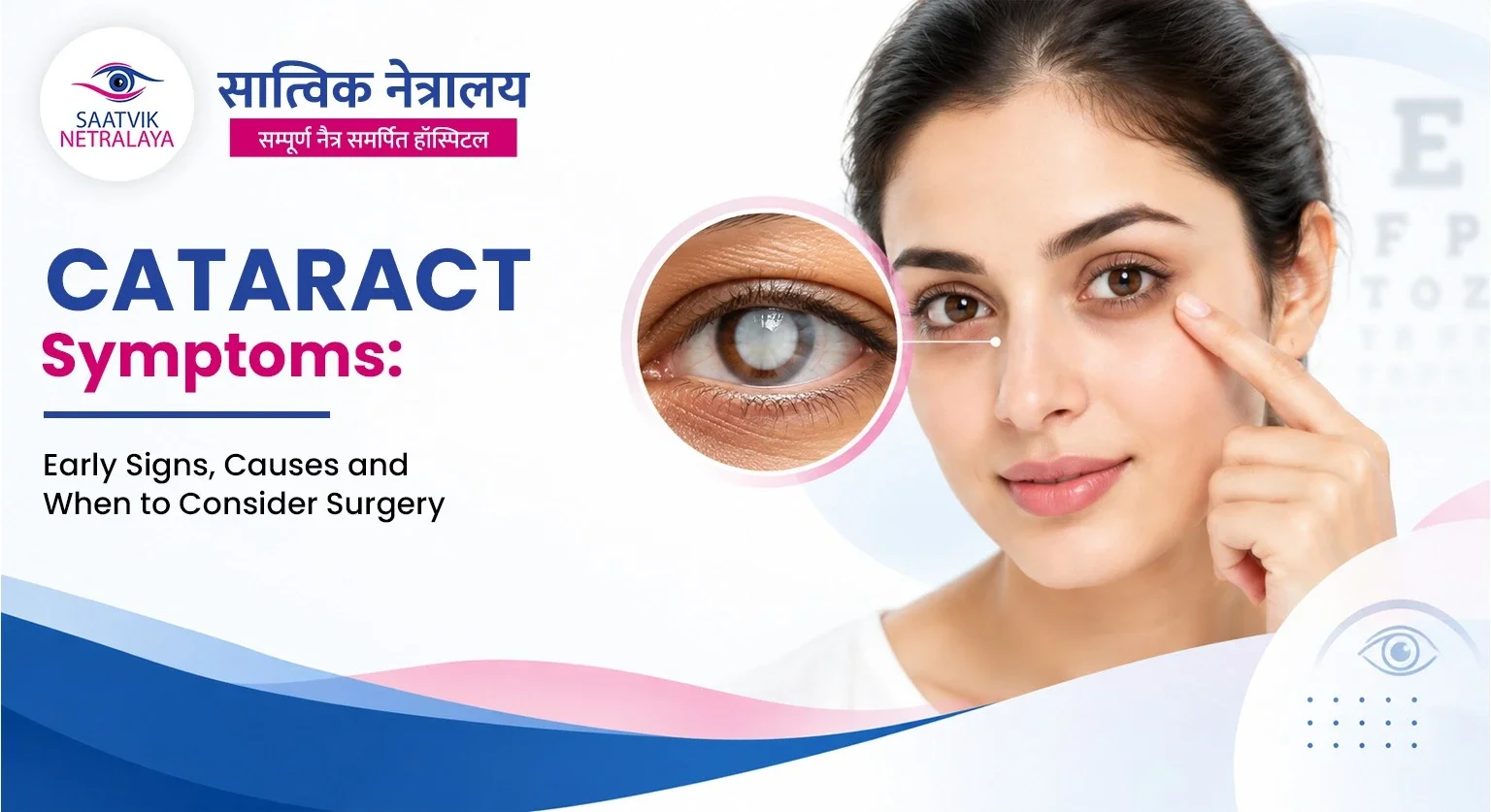
Are you experiencing blurry vision, glare or difficulty seeing people and objects clearly? These changes can be related to cataract symptoms. Cataract is a condition in which the eye’s natural lens becomes cloudy. Some other symptoms include faded colours and increased sensitivity to bright lights.
Early signs of cataract often develop gradually and may be difficult to notice. However, not all vision changes occur due to cataracts. Some other possible causes are refractive errors, presbyopia and glaucoma. This is why an eye test is necessary to confirm the actual cause. To perform such tests, an eye specialist in Jaipur can assess your symptoms and recommend appropriate care.
What Are the Common Symptoms of Cataracts?
Cataracts can cause cloudy vision, glare, faded colours and difficulty seeing at night. These cataract symptoms in adults are often mild at first, so they are easy to brush off. As the cataract progresses, the changes become harder to ignore. Here are the common changes people notice as well as what each one feels like day to day:
Blurry or Cloudy Vision
Blurry vision due to cataracts occurs when the eye’s natural lens becomes cloudy, making objects appear less clear. Things can look foggy or smudged, like a dirty window. Reading small print, recognising faces or watching television may take more effort. Blinking or cleaning your glasses will not clear it. Blur has other causes as well, so only an eye examination can tell you the reason.
Glare and Difficulty Seeing at Night
The cloudy lens scatters light inside the eye. Headlights may spread into halos or starbursts, and bright sunlight can feel harsh. Night driving is often where people first notice a problem. If cataract symptoms at night start to feel unsafe, book an eye test as soon as possible.
Faded Colours and Frequent Changes in Glasses
Colours can look dull or slightly yellow, and whites may seem creamy. You might also find yourself needing a new glasses prescription again and again. As the lens changes, your focus shifts, so stronger glasses help only for a short time. Prescriptions can change for other reasons, so get it checked.
Can Cataracts Affect One Eye or Both Eyes?
Cataracts can develop in one eye or both, but they cannot spread from one eye to the other. When both eyes are affected, the clouding often progresses at different rates, so one eye may seem worse than the other. Knowing the cataract symptoms and patient guidance matters, because early cataracts may cause no changes. In contrast, later ones can bring blurry vision, faded colours, glare, night vision trouble or double vision.
What Causes Cataracts?
Cataracts usually develop when changes in the eye’s natural lens make it cloudy. Ageing is a common cause, but other factors can raise your risk as well. Here are some common causes of Cataracts:
Age-Related Changes in the Eye Lens
The lens is made mostly of water and protein. With age, some of these proteins can clump together. The clumps cloud small areas of the lens. Over time, the cloudy patch grows and scatters more light, so vision slowly turns hazy.
Medical Conditions, Medicines and Lifestyle Factors
Age is not the only trigger. Several health conditions, medicines and habits can raise the risk of cataracts or help them develop earlier. The common cataract causes and risk factors include:
- Diabetes
- Smoking
- A previous eye injury
- Certain eye surgeries
- Long-term steroid use
Having one of these cataract risk factors does not mean you will develop a cataract. Ask your doctor about regular eye checkup needs.
How Are Cataract Symptoms Diagnosed?
Cataract symptoms are diagnosed through a comprehensive eye examination by an ophthalmologist. Blurry vision, glare and similar changes can come from several eye conditions, so the examination is what confirms the cause. It also shows whether a cataract is present.
What Happens During an Eye Examination?
Cataract diagnosis begins with vision testing. The ophthalmologist measures how clearly a person sees at different distances through tests such as reading a letter chart. A comprehensive eye examination also includes the patient's response to light and other related eye tests.
When Should You Book an Eye Examination?
It is worth seeking eye care services if you notice your vision is changing or daily tasks such as reading and driving feel harder. If your vision changes suddenly, you should consult an eye doctor right away.
Can Cataract Symptoms Improve Without Surgery?
Cataract symptoms can be managed but may not be reversed on their own without surgery. An updated glasses prescription, brighter lighting and anti-glare sunglasses can make reading, driving and daily tasks more comfortable in the early stages. These are supportive steps for mild changes. They help for a time and do not remove the cataract from the eyes.
Do Eye Drops or Home Remedies Remove Cataracts?
Surgery is the only way to remove an established cataract. Over-the-counter eye drops and home remedies are not sufficient to clear a cloudy lens. Among cataract treatment options, an ophthalmologist can explain which ones suit your eyes and daily needs.
When Is Cataract Surgery Needed?
Surgery may be considered when cataracts interfere with daily activities such as reading, driving or watching television. The surgical decision depends on the eye examination, the symptoms, individual needs and a discussion with an ophthalmologist.
What Happens During Cataract Surgery?
The ophthalmologist removes the cloudy natural lens and replaces it with an artificial intraocular lens. Numbing drops keep the eye comfortable and tiny instruments break up the lens and take it out. The new lens is then placed in the eye.
Among cataract treatment options, surgery is the only way to remove a cataract. Before the procedure, the doctor explains the benefits as well as possible risks. Results and recovery differ from person to person. Because of that, the ophthalmologist advises on what to expect depending on the patient's case.
What Factors Affect the Timing of Surgery?
The timing depends on daily activities, vision needs, examination findings and any other eye conditions. A person who drives or reads for long hours may be ready for surgery sooner than someone with lighter visual demands. Many cataracts can be monitored for a time before surgery is planned. General cataract surgery information shows that waiting is usually safe for the eye, so the operation can be scheduled at a suitable time.
When daily tasks become difficult, an ophthalmologist can discuss Cataract Surgery in Jaipur after a full eye examination. Other eye conditions found during the examination can also shape the plan.
When Do Vision Changes Need Urgent Medical Attention?
Any sudden or rapid changes in your vision should be evaluated immediately because they will be a different kind of visual change compared to the changes experienced during cataracts. Cataract information and guidance on symptoms indicate that the changes brought about by cataracts tend to be gradual.
The following symptoms may indicate different urgent eye problems:
- Loss of vision
- Eye pain
- Curtain in the field of vision
- Increase in flashes and floaters
Why Choose Saatvik Netralaya?
Saatvik Netralaya in Jagatpura, Jaipur is a leading eye care hospital and offers a detailed eye examination and an individual treatment plan for every patient. Our clinic is led by Ophthalmologist Dr. Garima Agarwal, who has more than 13 years of experience in ophthalmology. She is also the Director, Eye Bank Society, Rajasthan and has held the post for the last 2 years.
Our services include comprehensive eye care, optical coherence tomography, glaucoma evaluation and cataract surgery. Our cataract surgery techniques include phacoemulsification and micro-incision surgery, with a choice of intraocular lenses based on each patient’s needs.
Frequently Asked Questions
1. What Are the First Symptoms of Cataracts?
The earliest symptoms of cataracts are slightly cloudy vision, sensitivity to light, colour dulling and difficulty seeing at night.
2. Can Cataracts Cause Blurry Vision?
Yes. As more clouds form in the lens, the greater the chance that cataracts will create light scattering and blurred vision.
3. Do Cataracts Cause Difficulty Seeing at Night?
Yes, cataracts create trouble in night vision. This is because the lens in the eyes becomes clouded and scatters the incoming light instead of directing it to the retina.
4. Can Cataracts Be Treated Without Surgery?
In case of minor cases of the disease, new glasses and better illumination can be helpful. However, there is no medication that can remove existing cataracts.
5. How Are Cataracts Diagnosed?
An eye doctor performs a test using a Snellen chart at a certain distance, along with other tests such as a slit lamp test, dilated eye exam as well as an Intraocular Pressure (IOP) Test.
6. When Should Someone Consider Cataract Surgery?
Surgery could be considered if the vision disorders strongly impair the ability to do everyday activities such as reading, driving or watching television.
7. Can Cataracts Develop in Both Eyes?
Yes, there can be cataracts in both eyes of a person despite the fact that their development happens in different time periods in each eye.
8. Can Cataracts Be Prevented?
Cataracts are not always preventable, but wearing protective UV-blocking sunglasses and avoiding smoking may help to reduce the risk of developing them.
Conclusion
Symptoms of cataracts, like clouded vision, glare and problems with night vision, may interfere with daily tasks. The eye test will reveal the reason and provide information regarding possible treatment options. Recognising the need for cataract surgery depends on the intensity of the symptoms, results of eye tests and personal vision requirements. At Saatvik Netralaya, we help you understand your eye condition and discuss suitable treatment options. If your vision has changed, book an appointment with our team for an eye examination.