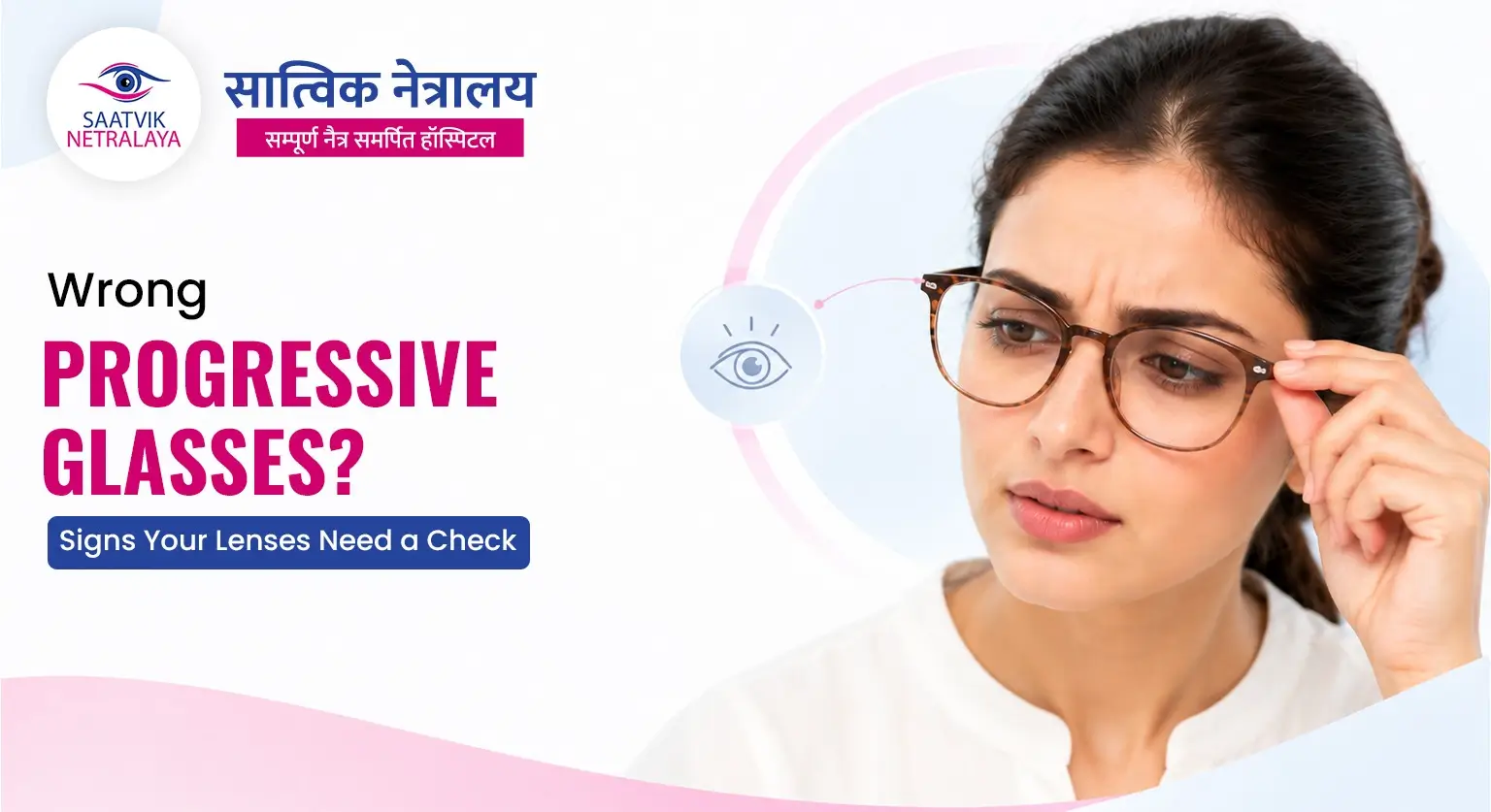
Are you facing issues with blurry vision, headaches or difficulty focusing while wearing progressive glasses? Progressive glasses problems may stem from adjustment, poor frame position, inaccurate lens measurements, a prescription change or an eye condition. Discomfort alone does not prove the glasses are wrong. But persistent or severe symptoms need professional assessment.
Progressive lenses combine distance, intermediate and near vision in the same lens. Clear vision is dependent on the correct use of the viewing zone and the proper fitting of the lenses. New lenses may feel unfamiliar around the edges. However, ongoing blur, dizziness or reading difficulty should not be dismissed as normal adjustment. A professional review can help identify the cause or check whether you use the wrong progressive glasses.
What Are Progressive Glasses Problems?
These symptoms affect comfort or clarity with lenses that change prescription gradually. Progressive glasses problems include blur, trouble finding the reading area, peripheral distortion and eye strain.
Progressive lens problems need a review, not an automatic prescription change.
How Do Progressive Lenses Work?
Progressive lenses have three zones without a visible bifocal line. The upper supports distance, the middle suits screens, and the lower supports reading. Head movement helps place the right zone in front of your eyes.
What Problems Can New Progressive Glasses Cause?
Mild blur, edge distortion or trouble finding the near zone can occur during adjustment. Persistent or worsening symptoms need a review of frame position, measurements, prescription and eye health.
What Are the Signs Your Progressive Glasses Need Checking?
Wrong progressive glasses may interfere with daily tasks. But symptoms alone cannot confirm the cause. Signs of incorrect progressive lenses include lasting blur, headaches, dizziness or reading difficulty. A professional can check the fit and prescription.
Blurry Vision Through Progressive Glasses
Progressive glasses blurry vision may affect distance or reading. Causes include prescription changes, incorrect fitting height, lens misalignment or frame slippage. Dry eye can also blur vision, so an examination may be needed.
Headaches, Eye Strain or Dizziness
Headaches, strain or light dizziness may occur during adjustment, but can also relate to screen use, dry eyes or refractive errors and symptoms. Persistent progressive glasses dizziness, especially with balance problems, needs professional review.
Difficulty Reading or Using a Computer
Reading may be difficult if the near or intermediate zone does not suit the task, the frame is too low, or the design mismatches the working distance. Report repeated head tilting or trouble finding a clear area.
Distorted Vision When Walking or Using Stairs
Progressive lenses can distort objects near the edges as the prescription changes. Use the distance zone when walking and turn your head to focus. Take care on stairs and avoid driving if balance or depth perception feels unreliable.
Why Are Your Progressive Glasses Not Working Properly?
Progressive glasses not working as expected may reflect a fitting issue, lens design, prescription change or eye condition. Progressive lens fitting problems require assessment of the glasses and symptoms.
Incorrect Prescription or Lens Measurements
An old prescription can distort distant vision. Accurate pupillary distance and height help in ensuring that the zones are properly fit to the eyes. Errors may lead to vision problems despite having a correct prescription.
Poor Frame Fit or Incorrect Lens Position
Frames that slide, tilt or rest too far from the face can shift viewing zones. Ask the dispensing professional to check the fit. Do not bend the frame or alter the lenses yourself.
Wrong Lens Design for Your Daily Activities
Reading, computer work and driving need different viewing distances. A general-use design may not suit long screen hours. Explain your routine so the professional can assess the lens design.
An Underlying Eye Condition
Persistent blur may relate to dry eye, cataract or another condition. In case the lenses seem right but the symptoms persist, the eye test will help determine if there is a need for any treatment.
How Long Does It Take to Adjust to Progressive Glasses?
Progressive lenses adjustment varies by person and lens design. Comfort may take days or longer. For how to adjust to progressive glasses-
- Follow your eye-care professional’s wearing instructions.
- Use the new lenses as advised instead of switching pairs repeatedly.
- Turn your head towards the object to find the clearest zone.
- Avoid driving or hazardous tasks while vision or balance feels unstable.
- Arrange a review if symptoms persist or worsen.
What Should You Do If Your Progressive Glasses Feel Wrong?
If progressive glasses problems continue, have your vision and glasses checked before ordering another pair. Progressive lens prescription problems are one possible cause, so review fit and measurements too.
Check the Frame Fit and Lens Position
See if the frame is still even and stable. If it moves or isn’t evenly set, have the dispensing professional check it out. Do not adjust your lenses or frames on your own.
Ask for a Prescription and Lens Measurement Review
The eye specialist can match up the lenses to the prescription. An eyesight examination might need to be done in the case where one’s sight is still blurred even after making the glasses correctly.
When Should You Get an Eye Examination?
Arrange an examination if blur, headaches or focusing difficulty persist. An expert can evaluate any problems related to the lens and the overall eye conditions. Consult an eye specialist in Jaipur for an appropriate assessment.
How Can You Reduce Discomfort While Using Progressive Glasses?
Correct fitting and professional guidance may improve comfort.
- Ensure the frame is correctly positioned and get assistance if it moves.
- Follow your eye-care professional’s adaptation advice.
- Use the right zone for reading, screens and distance vision.
- Take care on stairs if the lens edges distort your view.
- Return for review if blur or discomfort continues.
Home measures cannot correct prescription or measurement errors.
When Should You Stop Using Uncomfortable Progressive Glasses and Seek Help?
Driving and running machines are not advisable when wearing uncomfortable glasses that make it hard for you to see. You are recommended to seek advice from an eye care specialist when difficulties are too serious, or vision feels unsafe. Do not stop prescribed glasses permanently without guidance.
Sudden vision loss, severe eye pain or sudden double vision needs prompt medical assessment. Do not assume these symptoms are normal with progressive lenses or wait for a routine review.
Why Choose Saatvik Netralaya?
The Saatvik Netralaya in Jaipur provides eye examinations, overall eye care and treatment for dry eyes and glaucoma. Dr Garima Agarwal is identified as an ophthalmologist holding an MBBS degree from Government Medical College, Surat, and an MS in Ophthalmology from SMIMMER, Surat. She also has a Fellowship in Cataract & Cornea from Sanakara Netralaya, Chennai.
Persistent symptoms need assessment before incorrect glasses are assumed. The clinic lists eye examination services and does not confirm specialised progressive-lens fitting or spectacle dispensing. To arrange an examination, contact Saatvik Netralaya through its official channels.
Conclusion
Progressive glasses problems include blur, strain, headaches, dizziness, reading difficulty or distortion. Causes include adjustment, measurements, frame position, lens design, prescription changes or eye conditions. Persistent symptoms need to be assessed.
You should always avoid driving with unstable vision and seek prompt care for sudden vision loss, severe eye pain or sudden double vision. If you suspect wrong progressive glasses, arrange a review before replacing them. Contact Saatvik Netralaya for an eye examination.
FAQs
1. What are the common progressive glasses problems?
Common progressive glasses problems include blur, difficulty finding the reading zone, eye strain, headaches and peripheral distortion. Persistent discomfort or worsening vision needs a professional review.
2. How do I know if my progressive glasses are wrong?
Repeated blur, reading difficulty, dizziness or unusual head tilting may signal a fitting issue, but do not prove the glasses are wrong. Ask a professional to check the prescription, measurements and frame position.
3. Can progressive glasses cause headaches or dizziness?
The new glasses can cause headaches or dizziness during adjustment. Eye strain or an eye condition can also cause common symptoms. Seek a review if they persist, worsen or affect balance.
4. Why is my vision blurry with progressive glasses?
Blur can arise due to changes in prescription, improper fitting height, improper alignment of lenses, slipping of frames or inability to use the right zones. Dry eyes may also cause blurring of vision. Thus, it needs to be evaluated.
5. How long does it take to adjust to progressive lenses?
Adjustment varies by person and lens design. Comfort may take days or longer. Do not ignore severe or worsening symptoms. Contact your eye-care professional if clear, comfortable vision does not develop.
6. Why is reading difficult with my progressive glasses?
Reading can be challenging when there is an improper alignment of the near zone, poor positioning of the frame or a need to recheck the prescription. Consult a professional if the problem persists.
7. Can incorrect progressive lens measurements cause blurry vision?
If the pupillary distance or height is not right, it can cause the lens zones to be misaligned. This further causes blurring. A dispensing professional can assess this and make a decision on whether the frame should be remade.
8. Should I stop wearing progressive glasses if they feel uncomfortable?
Do not drive or perform hazardous activities when vision is blurred. Seek advice from your eye care professional regarding wearing or changing glasses temporarily. Also, do not discontinue the prescribed glasses permanently without instructions.