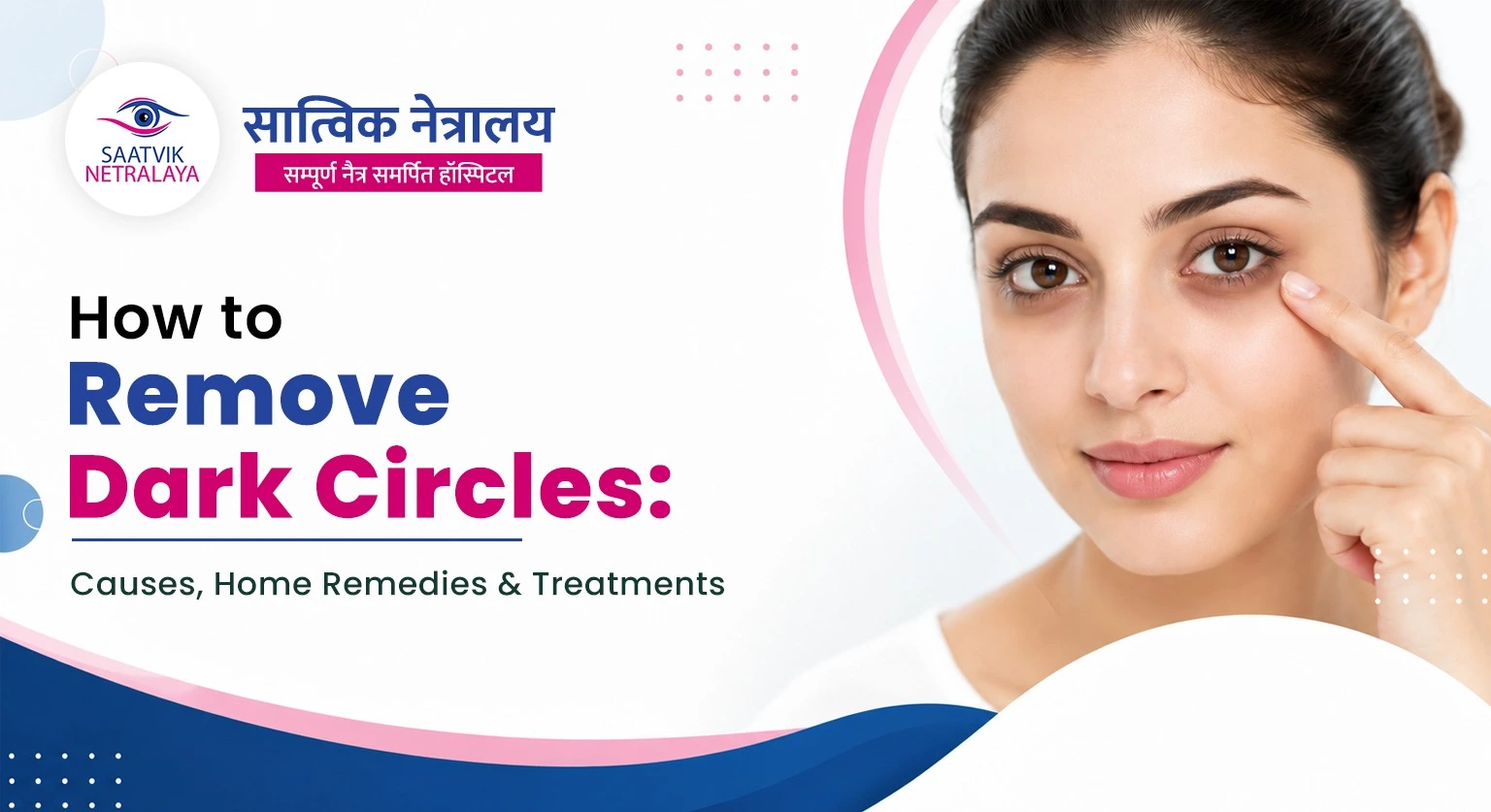
Are you also worried about why your dark circles won’t go away, no matter how much you sleep? The honest answer is that most under-eye darkness isn’t caused by tiredness alone. It comes from thin skin, genetics, blood vessels located close to the surface, or years of sun exposure stacking up quietly. Research from an Indian dermatology study found that nearly30% of people show signs of periorbital hyperpigmentation, and the number rises even higher among younger adults dealing with screen fatigue and poor sleep habits.
Knowing how to remove dark circles starts with knowing which type you have, because a puffy-eye remedy won’t work on a pigmentation problem. This guide walks through the real causes, home fixes worth trying, and the clinical options an eye hospital in Jaipur, like Saatvik Netralaya, actually recommends when home care isn’t enough.
What Are Dark Circles?
Dark circles are the shadowy or discolored patches that show up under your eyes, and doctors call this condition periorbital hyperpigmentation.
- The skin under your eyes is thinner than skin almost anywhere else on your body, sometimes less than half a millimeter thick.
- That thinness means blood vessels underneath show through more easily, and any swelling or pigment change becomes obvious fast.
- Some people notice a bluish or purplish tint. Others see brown or grayish patches instead. A few just have hollow, shadowed under-eyes that look dark because of bone structure, not skin color at all.
This is why “dark circles” isn’t really one condition. It’s an umbrella term for three or four different problems that happen to show up in the same spot on your face.
What Causes Dark Circles Under the Eyes?
Dark circles under the eyes causes include certain physical attributes you’re born with, as well as habits you develop throughout your life.
- Genetics plays the biggest role for a lot of people, but sleep, allergies, nutrition, and sun exposure all pile on top of that baseline.
- While referring to how to treat dry eyes, doctors regularly stress that pinpointing the exact cause matters more than trying every remedy at once.
- A proper eye check-up and dry eye assessment often reveal surprising contributors like chronic eye strain or untreated dryness.
Two things tend to be true at once here. First, most cases involve more than one cause layered together. Second, treating the wrong cause wastes time and money without fixing anything.
Genetics and Heredity
If your parents or grandparents had noticeably dark under-eyes, there’s a strong chance you inherited the same trait. One clinical study on periorbital hyperpigmentation found that53% of patientsreported a family history of the condition, and family history was one of the strongest predictors researchers identified. Genetic dark circles usually show up early, sometimes in the teenage years, and they tend to remain deeper in the skin rather than staying right at the surface.
Lack of Sleep and Lifestyle
Poor sleep doesn’t create pigment on its own, but it does make existing dark circles look worse. When you’re sleep-deprived, blood flow slows, and skin looks paler, which makes the blood vessels underneath your eyes stand out more sharply. Add screen time, stress, alcohol, and smoking to the mix, and the shadows deepen further. None of these habits alone causes dark circles from scratch, but together they make a normal case look severe.
Vitamin and Nutrient Deficiency
Low iron levels, or anemia, show up on the face before they show up anywhere else sometimes. When your blood carries less oxygen, the skin under your eyes can take on a bluish or grayish tone. Vitamin K and vitamin B12 deficiencies get linked to dark circles too, since both nutrients affect blood vessel health and skin repair. A simple blood test can confirm whether adequate nutrition is a problem, and what the probable solution should be.
Allergies and Eye Rubbing
Allergic reactions trigger histamine release, which dilates blood vessels and causes itching. The itching leads to rubbing, and rubbing damages the delicate skin around your eyes, sometimes triggering a cycle of inflammation and pigmentation known as post-inflammatory hyperpigmentation. People with seasonal allergies or chronic allergic conjunctivitis often notice their dark circles flare up right along with their sneezing.
Aging and Sun Exposure
As you age, skin naturally loses collagen and fat volume, which makes the under-eye area look hollow and shadowed even without any extra pigment. Sun exposure speeds this up by breaking down collagen faster and triggering melanin production as a defense response. That’s why sunscreen around the eyes, an often-skipped step, matters more than most people realize.
Self-Test: Which Type of Dark Circle Do You Have?
All dark circles under eyes for men do not need the same fix, so figuring out your type before you spend money on creams or treatments saves both time and disappointment. Try this simple test at home: gently stretch the skin under your eye with two fingers. If the darkness fades, it’s likely pigment-related. If it stays the same or looks bluer, blood vessels or structure are probably involved.
Vascular Dark Circles
These appear bluish or purplish and come from blood vessels visible through thin skin. Pressing gently on the area and watching the color shift is a telltale sign. Cold temperatures often make vascular circles look worse temporarily.
Pigmented Dark Circles
Brown or grayish in tone, these come from excess melanin rather than blood vessels. Sun exposure, rubbing, and genetics are the usual triggers. Pigmented circles don’t change much with pressure or temperature.
Structural Dark Circles
Caused by hollowing, fat loss, or the shape of your under-eye area, these create shadows rather than actual discoloration. They’re common with aging and tend to respond better to volume-restoring treatments than to creams.
| Type | Color | Main Trigger | Responds Best To |
|---|---|---|---|
| Vascular | Blue/purple | Thin skin, blood vessels | Retinol, sleep, cold compress |
| Pigmented | Brown/gray | Melanin, sun, rubbing | Vitamin C, sunscreen, chemical peel |
| Structural | Shadowed hollow | Fat loss, bone structure | Filler, PRP therapy |
How to Remove Dark Circles Naturally at Home
If your dark circles are mild and recent, home remedies for dark circles can genuinely help, especially when the cause is temporary swelling or fatigue rather than deep pigmentation. These options are gentle enough to try every day and cost almost nothing.
Home care won’t erase severe pigmentation or structural hollowing, but it’s a reasonable first step for most people. You should wait for any remedy at least two to three weeks before deciding it isn’t working.
Cold Compress / Ice Therapy
Wrap ice cubes in a soft cloth and hold them under your eyes for five to ten minutes. Cold constricts blood vessels and reduces puffiness almost instantly, which is why this remains one of the most searched fixes for how to remove dark circles overnight. It won’t fix pigmentation, but it works well before an event or early morning meeting.
Potato and Tomato Remedies
Raw potato slices contain a mild bleaching enzyme that some people find helpful for pigmented circles. Tomato juice mixed with a few drops of lemon is a popular home mix too, though citrus can irritate sensitive skin, so patch-test first. Apply for ten to fifteen minutes and rinse with cool water.
Almond Oil and Vitamin E
Massaging a few drops of almond oil into the under-eye area before bed can improve skin texture over time. Vitamin E supports skin repair and may reduce the appearance of fine pigmentation with consistent nightly use. This remedy works slowly, usually over several weeks.
Turmeric and Rose Water
A small pinch of turmeric mixed with rose water creates a mild paste that some people use for brightening. Turmeric has natural anti-inflammatory properties, and rose water soothes irritated skin. Leave it on for ten minutes and rinse gently, avoiding contact with the eyes themselves.
Best Skincare Ingredients and Products for Dark Circles in India
Choosing thebest cream for dark circles comes down to matching the ingredient to your specific type of darkness rather than picking whatever’s trending. Indian pharmacies and dermatology clinics carry a wide range of options, but four ingredients consistently show up in clinical recommendations.
Price and marketing claims vary wildly across brands sold in India, so ingredient concentration matters more than packaging. Look for products with clear percentage listings on the label.
Retinol
Retinol boosts collagen production and thickens the skin over time, which helps reduce the visibility of blood vessels underneath. Start with a low concentration two to three times a week, since retinol can irritate the delicate eye area if overused. Results typically show after six to eight weeks.
Vitamin C Serum
Vitamin C brightens skin and fights pigmentation by inhibiting excess melanin production. It works especially well for pigmented dark circles and pairs safely with sunscreen during the day. Look for stabilized formulations made specifically for the under-eye area.
Caffeine Eye Cream
Caffeine constricts blood vessels and reduces fluid buildup, making it one of the best under-eye creams for dark circles options for people dealing with puffiness alongside discoloration. Many affordable Indian skincare brands now include caffeine as a core ingredient. Store the cream in the fridge for an extra cooling effect.
Hyaluronic Acid
Hyaluronic acid hydrates and plumps the skin, which helps with structural hollowing rather than pigmentation directly. Well-hydrated skin also reflects light more evenly, softening the appearance of shadows. It layers well underneath heavier creams like retinol or vitamin C.
What to Look for in an Under-Eye Product
- Fragrance-free formula to avoid irritation
- Clearly listed active ingredient percentage
- Ophthalmologist-tested or dermatologist-tested label
- Separate day (vitamin C/SPF) and night (retinol) routines
- Patch test before applying near the eyes
Clinical and Eye-Specialist Treatments for Dark Circles
When home remedies and creams stop making a visible difference, clinical treatments become a more realistic path toward how to remove dark circles permanently. These procedures target the deeper causes, pigment, blood vessels, or lost volume, that topical products simply can’t reach. A consultation covering eye care services helps determine which procedure actually matches your dark circle type before you commit to one.
Dark circle removal treatment cost in India varies by city, clinic, and procedure, so getting a proper evaluation first prevents wasted spending on the wrong treatment.
Chemical Peel
A chemical peel removes the top layer of pigmented skin to reveal lighter skin underneath. A recent systematic review of dark circle treatments found chemical peels delivered excellent improvement in some treated cases, making them a moderate but real option for pigmented circles specifically. Peels work best for surface pigmentation rather than deep vascular or structural issues.
Under-Eye Filler
Hyaluronic acid filler restores lost volume in hollow, structural dark circles, smoothing the transition between the lower eyelid and cheek. The same systematic review found filler treatments achieved the highest rate of excellent improvement among all procedures studied, at roughly 76%. Results are visible almost immediately and typically last between 9 and 18 months.
PRP Therapy
Platelet-rich plasma therapy uses your own blood components to stimulate collagen and improve skin texture and thickness. It’s gentler than filler and works gradually over a series of sessions. Results vary more from person to person compared to filler, so realistic expectations matter here.
Laser Treatment
Laser treatment targets both pigment and blood vessels, making it useful for mixed-type dark circles. The same meta-analysis found that combination and laser treatments produced excellent improvement in56% of cases, putting it solidly ahead of chemical peels for stubborn cases. Multiple sessions are usually needed, spaced a few weeks apart.
| Treatment | Best For | Downtime | Results Last |
|---|---|---|---|
| Chemical Peel | Pigmented | 2-3 days | Months, needs repeats |
| Under-Eye Filler | Structural | Minimal | 9-18 months |
| PRP Therapy | Mixed/vascular | 1-2 days | Gradual, several months |
| Laser Treatment | Mixed/pigmented | Few days | Long-lasting with sessions |
How to Prevent Dark Circles From Coming Back
Treating dark circles once doesn’t guarantee they stay away, so prevention matters just as much as the fix itself. Small daily habits protect whatever progress you’ve already made, whether that came from a cream or a clinical procedure.
Sleep Hygiene
Aim for seven to eight hours of consistent sleep, and try to keep your sleep schedule steady even on weekends. Sleeping slightly elevated can also reduce fluid pooling around the eyes overnight.
Hydration and Diet
Drink enough water throughout the day, and include iron-rich foods like leafy greens and legumes if a deficiency was part of your original cause. A balanced diet with vitamin C, vitamin K, and vitamin E supports skin repair from the inside.
Sun Protection
Apply a broad-spectrum sunscreen around the eye area every morning, and wear sunglasses when you’re outdoors for long stretches. This single habit prevents a large share of pigmentation-related dark circles from ever developing in the first place.
Dark Circles in Men, Teens and Special Cases
How to remove dark circles for men often involves the same causes as for anyone else, though men are statistically less likely to seek treatment early, which can let mild cases progress further before care begins.
- Irritation near the eyes after shaving and higher rates of undiagnosed allergies are two factors that show up more often in male patients specifically.
- Teenagers dealing with dark circles under the eyes, for men and women alike, usually have a genetic or lifestyle cause rather than aging-related volume loss.
- Screen time, late-night study sessions, and growth-related nutrient demands all play a role at this age.
- Pregnant women and people managing chronic allergies also fall into special categories where dark circles need a slightly different approach, often starting with identifying and managing the underlying trigger first.
When to See an Eye Specialist
Most dark circles are cosmetic, but certain signs mean it’s time to book an appointment rather than try another home remedy. See an eye specialist if:
- Dark circles appear suddenly and without a clear cause
- One eye looks noticeably different from the other
- Swelling, pain, or vision changes come along with the discoloration
- Home remedies and over-the-counter creams show zero improvement after two months
- You suspect an underlying condition like thyroid issues or chronic allergies
A proper eye exam can rule out medical causes and confirm which type of dark circle you’re actually dealing with, which saves months of guessing.
Why Choose Saatvik Netralaya
Saatvik Netralaya has built a name for itself as a reliable eye hospital in Jaipur, and the difference shows up in how the team actually approaches a “cosmetic” issue like dark circles. Instead of jumping straight to a recommendation, they look at your eye health as a whole, checking for things like allergies or dry eye disease that might be quietly driving the problem.
From there, you get a plan built around your actual dark circle type, not a generic checklist handed to every patient who walks in. That’s really the value here: experienced specialists who’d rather diagnose the real cause, so you end up with a treatment path that’s both safe and genuinely suited to you.
FAQs
What is the main cause of dark circles under the eyes?
For most people, it comes down to genetics first. That said, thin skin, visible blood vessels, too much sun, and habits like poor sleep all pile on and make things worse.
Can dark circles be removed permanently?
It depends on the type. Structural and vascular dark circles respond well to filler or laser therapy, and the results can hold for well over a year. Genetic pigmentation is trickier, though, and usually needs some upkeep along the way.
Can you permanently remove dark circles?
Genetics and thinning skin tend to stick around, so “permanent” isn’t quite the right word. What you can do is pair clinical treatment with steady prevention habits and keep them looking minimal for years at a stretch.
Can dark circles be removed in 2 days?
If it’s just puffiness or mild tiredness-related darkness, yes, a couple of cold compresses and a proper night’s sleep can visibly help within two days. Deeper pigmentation or structural circles are different and need weeks, sometimes clinical help, to actually shift.
Does ice remove dark circles?
It helps with swelling, and it tightens blood vessels enough to make vascular dark circles look lighter for a bit. It won’t touch actual pigment or hollowing, though, so don’t expect ice alone to solve the whole problem.
Which vitamin deficiency causes dark circles?
Low iron is the primary cause, and vitamin K or B12 deficiencies tend to show up alongside it. All three affect how blood moves and how your skin heals, which is exactly why they show up under your eyes first.