
One of the most widespread methods of vision correction is LASIK eye surgery. Its popularity is due to the fact that a large number of people have always wanted to quit using glasses or contact lenses. It is rapid, normally painless, and provides quick results. However, just like any other medical intervention, it has its risks and side effects too. It is important to understand both the advantages and the potential complications associated with LASIK before making a decision.
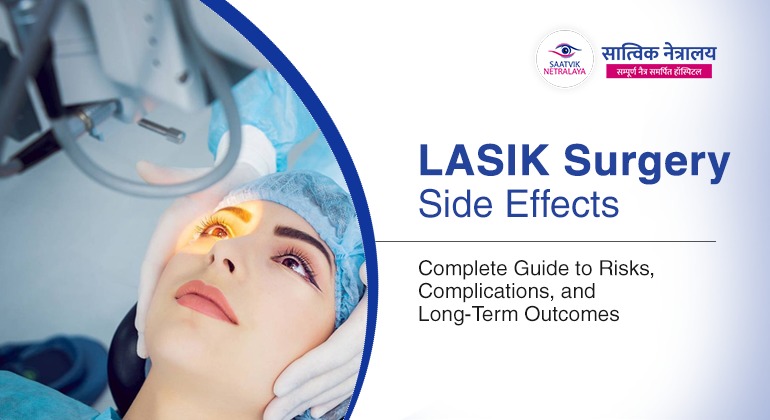
Through this guide, you will get a simple explanation of LASIK surgery. You will learn about frequent side effects, uncommon complications, long-term effects, and the safety measures to consider before undergoing this procedure.
What Is LASIK Eye Surgery?
LASIK is an abbreviation for Laser-Assisted In Situ Keratomileusis. It is a type of eye surgery that uses a laser to correct common vision problems such as:
- Nearsightedness (difficulty seeing distant objects clearly)
- Farsightedness (difficulty seeing nearby objects clearly)
- Astigmatism (distorted or blurred vision)
How LASIK Surgery Corrects Vision
Your eye has a clear front surface known as the cornea. LASIK reshapes the cornea using a specialized laser. When the cornea has a normal shape, light enters the eye correctly and focuses properly on the retina, helping you see clearly.
During the procedure:
- The doctor creates a thin flap on the cornea.
- A laser reshapes the inner corneal tissue.
- The flap is placed back into its original position.
Why LASIK Is a Popular Vision Correction Choice
- Fast procedure (usually 10–15 minutes per eye)
- Quick recovery
- Many patients see clearly within 24 hours
- Reduces or eliminates the need for glasses
Importance of Understanding Side Effects Before Surgery
Although LASIK is generally safe and widely performed, it does have side effects. Most are mild and temporary, but some rare complications can be serious. Being aware of them helps you make a wise and informed decision.
Safety in LASIK Eye Surgery
Success Rates and Patient Satisfaction
LASIK has a high success rate. Most patients are satisfied with their results, and many achieve 20/20 vision or close to it. However, results may vary from person to person.
Modern Technology Enhancing LASIK Safety
Advancements in technology have made LASIK safer than ever. Doctors now use:
- Advanced lasers for better accuracy
- Detailed pre-surgery eye scans
- Improved equipment for corneal flap creation
These improvements reduce risks and enhance outcomes.
Who Is a Good Candidate for LASIK?
You may be a suitable candidate if:
- You are over 18 years old
- Your prescription has been stable for at least one year
- You have healthy eyes
- Your cornea is thick enough
Who Should Avoid LASIK?
LASIK may not be suitable if you:
- Have very thin corneas
- Have severe dry eyes
- Have certain eye diseases
- Are pregnant or breastfeeding
- Have unstable vision
Understanding Side Effects vs. Complications
Common Side Effects vs. Serious Complications
- Side effects are common and usually mild. They often resolve over time.
- Complications are more serious and may require additional treatment.
Temporary vs. Permanent Effects
- Temporary side effects last days or weeks.
- Permanent side effects are rare but may persist longer.
Most patients experience mild temporary side effects. Serious complications are uncommon.
Common Side Effects After LASIK Surgery
Dry Eyes After LASIK
Dry eyes are very common. You may feel:
- Burning
- Itching
- Gritty sensation
This usually improves within weeks or months. Doctors often prescribe lubricating eye drops.
Blurry or Fluctuating Vision
Vision may not be perfectly clear immediately. It can fluctuate during the first few days or weeks.
Light Sensitivity
Your eyes may be sensitive to bright light. Wearing sunglasses can help.
Halos Around Lights
You may see rings around lights, especially at night.
Glare and Starbursts
Bright lights may appear unusually bright or diffused, particularly while driving at night.
These issues typically improve within a few weeks.
Moderate Side Effects That May Need Attention
Eye Discomfort or Mild Pain
Some patients experience slight pressure or discomfort. This usually resolves within a day or two.
Redness in the Eyes
- Redness or small red spots may appear but generally disappear in a few days.
Burning or Irritation
- It may feel like something is in your eye. Prescribed eye drops usually help.
Temporary Visual Distortion
- Vision may appear wavy or slightly distorted for a short time.
- If symptoms persist or worsen, consult your doctor.
Rare and Serious LASIK Complications
Infection After LASIK
Although rare, infection can occur. Warning signs include:
- Severe pain
- Increasing redness
- Eye discharge
Immediate medical treatment is necessary.
Corneal Flap Complications
The flap created during surgery may not heal properly. This can affect vision and may require additional treatment.
Undercorrection or Overcorrection
Sometimes too little or too much tissue is removed. A second procedure may be required.
Vision Loss
Severe vision loss is extremely rare but possible.
Delayed LASIK Side Effects
Chronic Dry Eye Syndrome
Some individuals may experience long-term dry eyes.
Night Vision Problems
Halos and glare may persist in certain patients.
Vision Regression Over Time
Vision may gradually change again, especially with aging.
LASIK and Age-Related Vision Changes
LASIK does not prevent natural aging changes such as presbyopia. Reading glasses may still be needed later in life.
Risk Factors for LASIK Side Effects
The risk increases if you have:
- Thin corneas
- High prescription before surgery
- Existing eye conditions
- An inexperienced surgeon
- Outdated technology
Choosing a qualified and experienced surgeon is extremely important.
Timeline of LASIK Side Effects
First 24–48 Hours
- Mild pain
- Blurry vision
- Watery eyes
First Few Weeks
- Dryness
- Light sensitivity
- Glare
Long-Term Recovery
Most people recover fully within 3 to 6 months.
How to Reduce the Risk of LASIK Side Effects
You can lower your risk by:
- Choosing a qualified eye surgeon
- Getting a comprehensive eye examination
- Following all pre-surgery instructions
- Using prescribed eye drops correctly
- Attending follow-up visits
Importance of Post-Surgery Care
Proper Use of Prescribed Eye Drops
Eye drops prevent infection and reduce dryness.
Avoid Rubbing Your Eyes
Rubbing may damage the healing flap.
Protecting Your Eyes
Wear protective glasses to shield against dust and sunlight.
Attend Follow-Up Appointments
Regular check-ups help detect issues early.
When to Contact Your Eye Doctor
Seek immediate medical attention if you experience:
- Severe pain
- Sudden vision loss
- Increasing redness
- Swelling
- Signs of infection
- Worsening vision
Do not ignore these symptoms.
LASIK vs Other Vision Correction Options
LASIK vs Photorefractive Keratectomy (PRK)
PRK is another laser procedure. It has a longer recovery period but avoids flap-related complications.
LASIK vs SMILE Surgery
SMILE is a newer method that may reduce the risk of dry eye.
LASIK vs Contact Lenses
Improper contact lens hygiene can lead to infections and long-term irritation.
Psychological and Lifestyle Effects
Daily Activities
Temporary blurred vision may affect reading or work.
Night Driving
Glare and halos may make night driving challenging initially.
Emotional Concerns
Some patients feel anxious if recovery seems slow. Patience and medical guidance are important.
LASIK Enhancement Surgery
When Is Enhancement Needed?
If vision is not fully corrected, a second procedure may be performed.
Safety of Repeat Procedures
Enhancements are generally safe if sufficient corneal tissue remains.
Recovery After Enhancement
Recovery may be quicker than the first surgery.
Myths and Misconceptions About LASIK
Myth: LASIK Causes Blindness
Blindness is extremely rare.
Myth: Side Effects Are Permanent
Most side effects are temporary.
Myth: LASIK Is Unsafe
LASIK is considered safe when performed by an experienced surgeon.
Benefits vs Risks: Is LASIK Worth It?
Advantages
- Clear vision without glasses
- Quick procedure
- Fast recovery
Risk vs Benefit Comparison
For most people, the benefits outweigh the risks.
Making an Informed Decision
Discuss thoroughly with your doctor. Ask questions and understand your eye health condition.
Modern Technology That Minimizes LASIK Risks
Wavefront-Guided LASIK
Creates a highly detailed map of your eye for precise correction.
Femtosecond Laser Technology
Provides accurate corneal flap creation.
Advanced Diagnostic Tools
Modern scans detect potential problems before surgery.
Mental and Physical Preparation
Set Realistic Expectations
LASIK improves vision but may not guarantee perfect results.
Understand the Recovery Process
Healing takes time. Patience is essential.
Importance of Patient Education
The more informed you are, the more confident and safe you will feel.
When LASIK Is Not Suitable
Medical Conditions That May Disqualify You
- Severe dry eye
- Autoimmune diseases
- Uncontrolled diabetes
Alternative Vision Correction Options
- PRK
- SMILE
- Implantable lenses
- Glasses or contact lenses
Always seek personalized advice from an eye specialist.
Professional Advice for Safe LASIK
Questions to Ask Your Surgeon
- Am I a suitable candidate?
- What risks apply to me?
- What technology do you use?
Choosing the Right Clinic
Look for:
- Experienced surgeons
- Modern equipment
- Positive patient reviews
Informed Consent
Read all documents carefully before signing.
Conclusion
LASIK surgery is a safe and effective vision correction method for many people. Most side effects are mild and temporary. Serious complications are rare but possible. Risks can be significantly reduced by choosing a qualified surgeon and following proper post-surgery care instructions.
Before making a decision, undergo a complete eye examination and discuss all concerns with a qualified eye specialist. A careful and informed choice leads to better results and peace of mind.
FAQ
What are the most common side effects of LASIK surgery?
Dry eyes, blurred vision, light sensitivity, glare, and halos are common.
Are LASIK side effects permanent?
Most side effects are temporary. Permanent problems are rare.
How long do dry eyes last after LASIK?
Dryness usually improves within weeks or months.
Can LASIK cause blindness?
Blindness is extremely rare.
How long does recovery take after LASIK?
Many recover within a few days, but full healing may take 3–6 months.