
On this page29 sections
- Common Causes of Swollen Eyes
- 1. Allergies
- 2. Stye (Anjanhari)
- 3. Chalazion
- 4. Conjunctivitis (Pink Eye)
- 5. Blepharitis
- 6. Orbital and Preseptal Cellulitis
- 7. Lifestyle Factors
- 8. Systemic Causes
- How to Identify the Cause: Symptom-by-Symptom Guide
- Important Distinctions
- Home Remedies for Swollen Eyes
- Do’s:
- Things NOT to Do:
- Medical Treatments
- 1. Conventional Medications
- 2. Ayurvedic Clinical Treatments
- When to See a Doctor
- Red Flag Emergency Signs (Go to the ER Immediately):
- Urgent (Within 24–48 Hours):
- Specialist vs. General Physician
- Frequently Asked Questions
- Q: How to reduce eye swelling fast?
- Q: Can lack of sleep cause eye swelling?
- Q: Why is one eye swollen and not the other?
- Q: Are swollen eyes contagious?
- Q: How long does a swollen eye last?
- Q: Can I use Visine or Otrivin for swollen eyes?
- Dr.Garima Agarwal
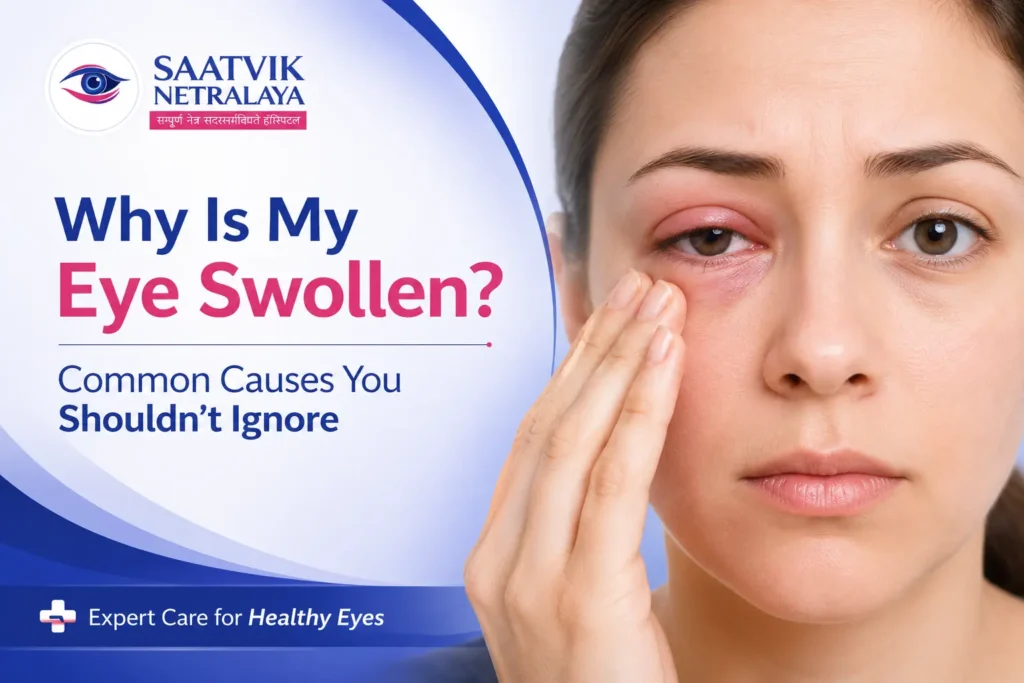
A swollen eye may be frightening when you wake up in the morning. Eye swelling can be puffiness or a bulging eye and means that fluid has accumulated in the tissue around the eye or the eyelids are inflamed. This is usually referred to as aankhon mein sujan in Hindi.
It is crucial to know the reason for the sudden swelling of the eye, in order to provide it with the proper relief. Let’s explore some of the common causes, symptoms, remedies, and when to go to urgent care.
Common Causes of Swollen Eyes
Eye swelling can occur due to various reasons ranging from simple lifestyle changes to medical emergencies.
1. Allergies
Allergic conjunctivitis occurs when the irritants such as pollen, dust, pet dander or make-up releases histamine. This makes both eyes swollen and itchy, and causes them to water.
2. Stye (Anjanhari)
A stye is a small, red, painful lump that develops at the edge of an eyelid and is due to a bacterial infection of an eyelash follicle and/or oil gland.
3. Chalazion
A chalazion is a pain-free bump that is usually mistaken for a stye and is located further back on the eyelid. Occurs when an oil gland is obstructed and it is not actively infected.
4. Conjunctivitis (Pink Eye)
This inflammation of the clear membrane that covers your eyelid may be caused by bacteria, a virus or an allergy. It triggers swelling, redness and a gritty sensation.
5. Blepharitis
A persistent inflammation of eyelids, typically around the place where eyelashes grow, which is triggered by blockage of oil glands or infection by bacteria. It causes the eyelid to become swollen, flaky or greasy.
6. Orbital and Preseptal Cellulitis
Cellulitis is a deep infection of the skin tissues by bacteria. Orbital cellulitis is serious and requires medical treatment and is confined to the tissues inside the eye socket, whereas preseptal cellulitis is confined to the eyelid.
7. Lifestyle Factors
- Crying / Fluid Retention: Emotional tears are less salty than tears of stress, which cause fluid to be drawn into the surrounding tissues and swell.
- No Sleep & No Screen Time: When you lack sleep and/or screen time, your blood vessels become dilated causing morning puffiness.
- Insect Bites: A mosquito bite or bug bite right on the thin skin of the eyelid can cause a very large localized swelling.
8. Systemic Causes
Some systemic fluid retention, such as occurs in thyroid disorders (Graves’ disease) or kidney disease, can result in fluid collecting around the eyes.
How to Identify the Cause: Symptom-by-Symptom Guide
To determine the meaning of a swollen eye, you must consider secondary symptoms:
| Symptoms | Likely Cause |
| Swelling + intense itching + watery discharge | Allergies |
| Swelling + painful red lump on eyelid edge | Stye (Anjanhari) |
| Swelling + redness + sticky crust/discharge | Pink Eye (Conjunctivitis) |
| Swelling + fever + pain when moving the eye | Orbital Cellulitis (Emergency) |
| Morning puffiness that clears by midday | Fluid retention / Lack of sleep |
Important Distinctions
- Upper vs. Lower Eyelid: A swollen upper lid usually indicates that the glands are blocked (chalazion) or that allergies are present. Swelling in the lower eyelid can be associated with systemic fluid retention and/or any sinus problems.
- Children vs. Adults: Children are very susceptible to pink eye and preseptal cellulitis caused by dirty hands rubbing their eyes. Blepharitis or puffiness occurring as a result of lifestyle is more common in adults.
Home Remedies for Swollen Eyes
Home remedies can provide quick relief for mild swelling.
Do’s:
- Cold Compress: Best for allergies, crying and insect bites. Use a clean cloth that has been dipped in ice water to constrict the blood vessels, which will help to reduce swelling.
- Use a warm compress: this is very helpful for styes and chalazions. To melt hardened oil in the glands, apply a warm damp cloth for 10 minutes.
- Cucumber Slices & Chilled Tea Bags: The antioxidants of cucumber calms skin. Green or black tea bags can be chilled and used to remove excess fluids, due to their caffeine and tannin content.
- Sleeping Position: Use an additional pillow to avoid fluid accumulation under the eyes during sleep.
- Traditional Rinses: Gentle rinses such as organic Gulab Jal (rose water) calm any irritation. An Ayurvedic Triphala eye wash (prepared from filtered boiled Triphala), can help alleviate inflammation – make sure it’s made from filtered boiled Triphala water and doesn’t contain any micro-particles. Aloe vera gel can be gently patted around the eyelid, without touching the eyeball.
Things NOT to Do:
- Don’t squeeze or pop a stye. This can help to deepen the infection into the eyelid.
- Avoid contact lenses. Continue wearing glasses until swelling and possible infection have resolved.
- Don’t apply heavy cosmetics on an active infection or inflammation.
Medical Treatments
When treatment at home doesn’t work, medical treatment is needed.
1. Conventional Medications
- The oral medications or eye drops (such as olopatadine) can block allergic reactions, known as oral antihistamines.
- Antibiotic eye drops – used for bacterial conjunctivitis or styes.
- Steroid Eye Drops: These drops are applied only by an ophthalmologist for very severe inflammation.
- Surgical Options: If the chalazion does not respond to any of the above treatments, then you may need a minor drainage procedure in the clinic or a local injection of a steroid.
2. Ayurvedic Clinical Treatments
A few ayurvedic eye clinics perform therapies for balancing the Pitta and Kapha doshas in the eyes such as Netra Tarpana (Medicated ghee retention) and Aschotana (therapeutic eye drops).
When to See a Doctor
Even knowing when to escalate care can save your vision.
Red Flag Emergency Signs (Go to the ER Immediately):
- Extreme pain in or behind the eye.
- Vision changes (blurriness, double vision or loss of vision).
- Failure to move the eyes side to side or eye movement is impaired.
- Swelling of the eye accompanied by a high fever.
- The swelling is expanding along one cheek or up the face.
Urgent (Within 24–48 Hours):
If a stye or chalazion continues to enlarge, or if there is yellow crusting and pus, which may indicate a bacterial infection, see an eye doctor.
Specialist vs. General Physician
A GP will be able to check your lifestyle, or your kidneys, to determine the cause of generalized puffiness in the morning. If the swelling is accompanied by redness, pain and changes in vision, visit the ophthalmologist immediately of a specialized eye clinic in Jaipur or your nearest city to get it evaluated by an expert. The telemedicine platforms in India can also provide quick consultation with an eye expert for initial directions.
Frequently Asked Questions
Q: How to reduce eye swelling fast?
A: A cold compress is effective in minutes for allergies and/or crying. A warm compress will help the drainage of an infectious bump such as a stye come out the quickest.
Q: Can lack of sleep cause eye swelling?
A: Yes. When you’re sleep-deprived, the veins in the eye area dilate and fill with blood, resulting in the familiar puffy eyes of the morning.
Q: Why is one eye swollen and not the other?
A: If the swelling is unilateral (one-sided), it is likely to be caused by something localized, such as a stye, a chalazion, an insect bite or a localized bacterial infection.
Q: Are swollen eyes contagious?
A: Only when it is due to infectious conjunctivitis (pink-eye). Puffiness due to allergies, styles and lifestyle does not transmit.
Q: How long does a swollen eye last?
A: Allergy puffiness may disappear in a matter of hours after your allergen has been eliminated. The process of a stye or chalazion clearing up can last from days to weeks.
Q: Can I use Visine or Otrivin for swollen eyes?
A: Don’t use nasal drops such as Otrivin in the eyes at all. Decongestant eye drops, such as Visine, make the eyes look less red, but may be responsible for the rebound redness and do not help the underlying causes of swelling.
Dr.Garima Agarwal
15 YEARS OF EXPERIENCE MBBS GOVERNMENT MEDICAL COLLEGE, SURAT M.S. IN OPHTHALMOLOGY SMIMMER, SURAT
Dr.Garima Agarwal is a well-qualified ophthalmologist with over 13 years of experience in ophthalmology. She has done her MBBS from Government medical college, Surat and her M.S. in Ophthalmology from SMIMMER, Surat. After that, she has done a long-term postdoc fellowship from the prestigious Sanakara Netralaya Chennai in cataracts and cornea.
Know More →